Walnut Window Stool, Traditional Room
A traditional window stool in walnut, sized to sit proud of the apron below and returned into the jamb at each end. This is the classic replacement profile for double-hung windows in older homes.
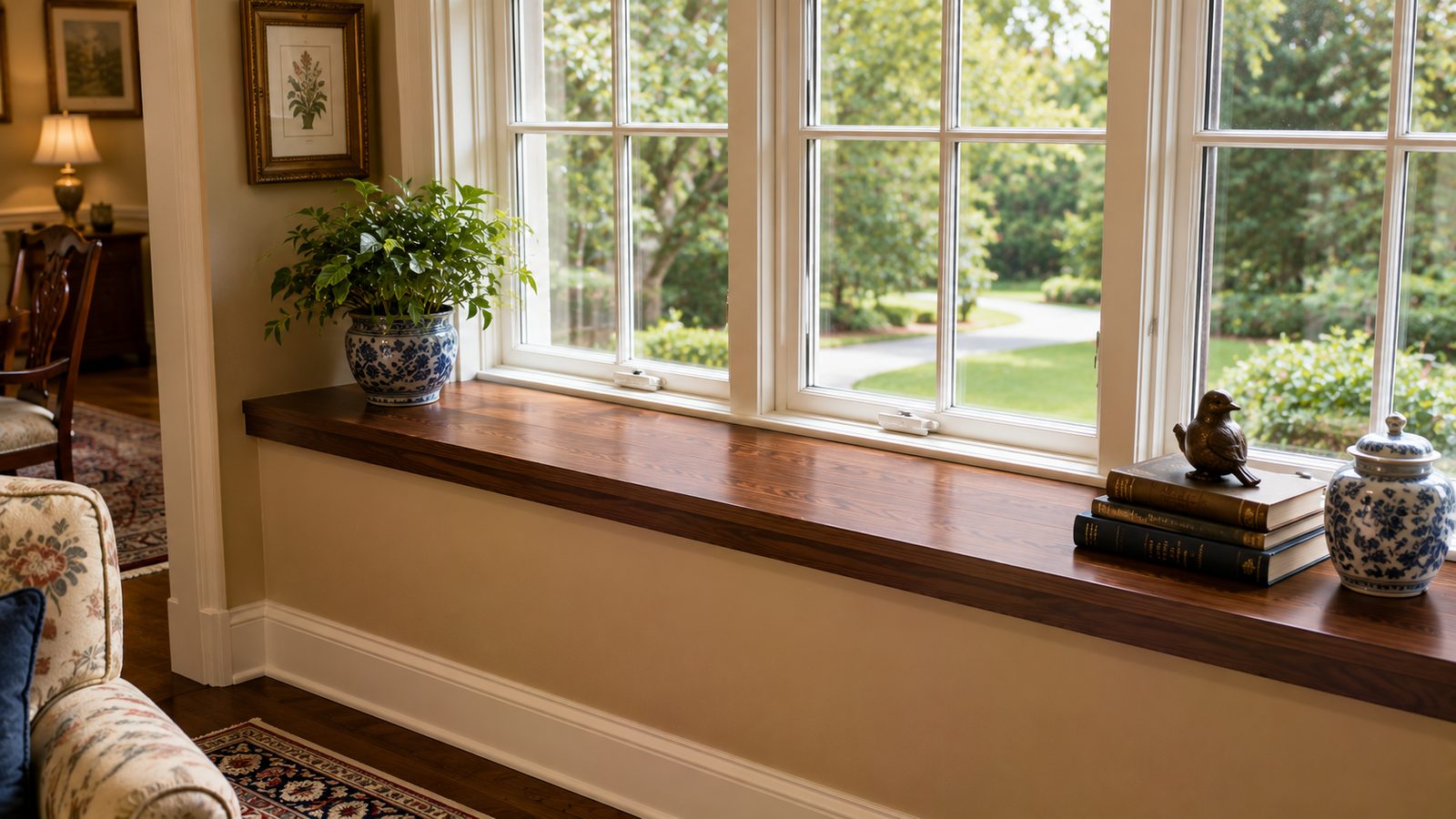
About this solid walnut sill
Hardwood sills are cut from solid stock, so the grain runs the full length of the piece and the front edge is built up from laminated lengths rather than veneered — the sill reads as one thick slab from every angle. Walnut, white oak, maple and cherry are stocked, each offered across the Spectrum Finishing stain library. Timber moves with humidity, so a hardwood sill is sized against the opening with a deliberate reveal and the end grain is sealed before it ships.
Living room sills
Living-room sills are often the longest runs in the house, spanning multi-panel windows, which makes the seam strategy and the front edge the two decisions that matter. Whatever the room, the sill is cut to your opening rather than trimmed to fit on site — length, depth, horn projection and corner treatment are all set before it is machined.
Specifying one like it
Measure jamb to jamb, then the depth from the window frame to where you want the front edge to land, and the horn length past each side if the sill returns into the wall. The configurator draws the piece live as you enter dimensions and produces a dimensioned spec sheet you can hand to an installer. See the measuring guide for the full method, or compare wood against solid surface before choosing.
This image is a rendering, shown to illustrate materials and proportions available through the configurator.